
GARDENSTYLE GUIDES
Waterlogging in the garden
GardenStyle · 13/11/2026
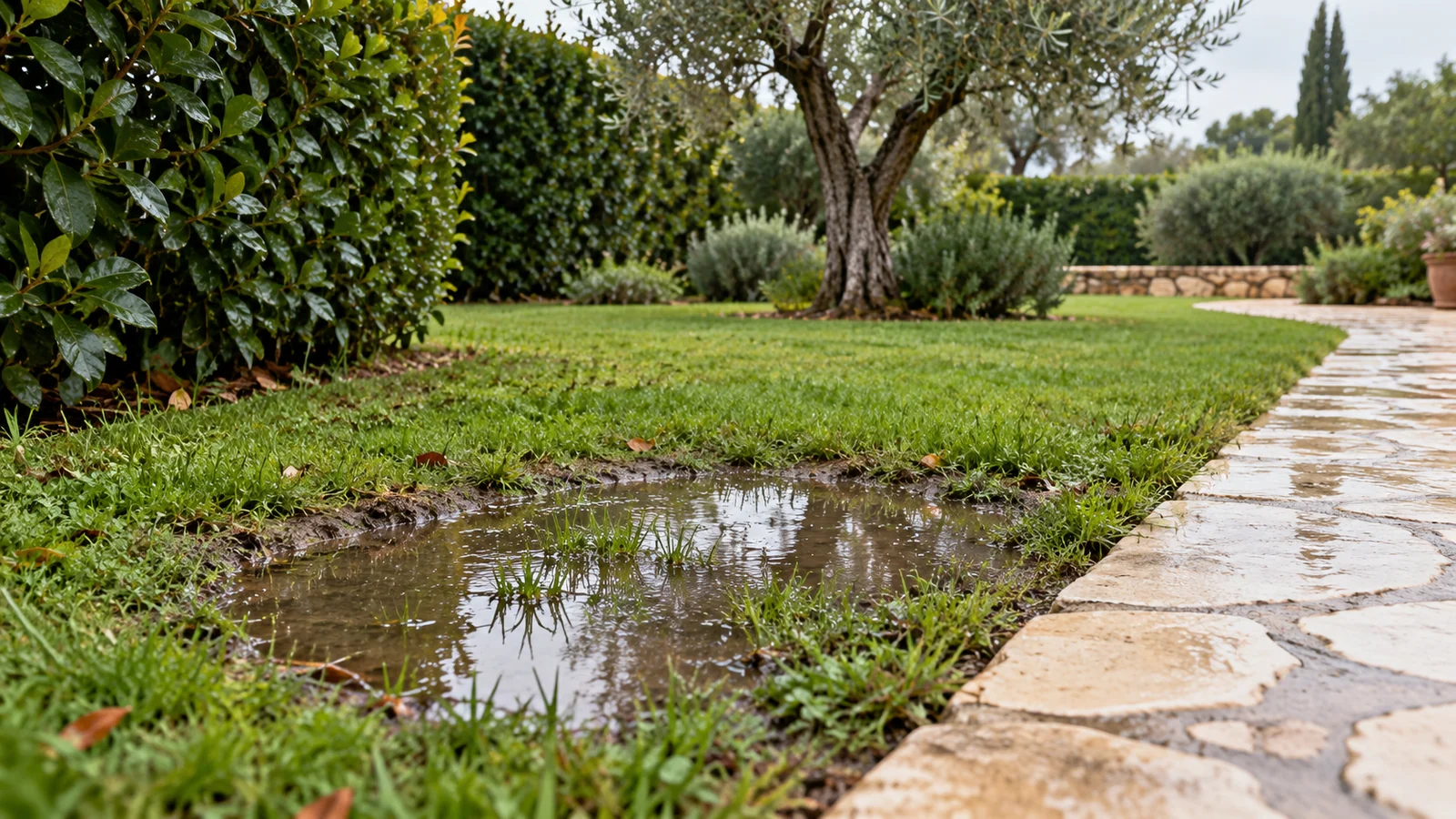
The rain has stopped, but part of the lawn remains full of puddles. Along the hedge the soil is soft, while some plants show yellow leaves despite abundant water. Before adding fertilizer or seeking treatment, it is best to understand where the water collects and why it cannot move away.
Garden waterlogging is a water-management problem that can affect lawns, beds and trees. It is important to distinguish temporary puddles after heavy rain from a recurring problem. This guide explains what to observe, which checks are useful and when to request a site visit, with gardens in Sassari and northern Sardinia in mind.
How to recognise waterlogging that needs attention
A puddle observed only once is not enough to describe the problem. It is more useful to follow the same area after different events: where the water appears, how far it extends, whether it disappears or remains, which plants are nearby.
Photograph the spot when the rain stops and take another photo when you return to check it. Note whether the irrigation was running. A short record helps distinguish an exceptional episode from a recurring condition.
Pay particular attention to the areas that always get wet first and dry last. If the problem appears even without rain, the check must include the irrigation system and possible leaks. An isolated wet patch has a different history than an entire surface area that collects runoff from upstream.
Why water collects: possible causes
Compacted soil
Repeated foot and vehicle traffic can compact soil, particularly when it is wet. Smaller spaces between soil particles impede infiltration and water movement. Compaction is therefore one possibility to consider near frequently used routes and areas affected by works. Penn State Extension
Depressions and water coming from other surfaces
A small low spot may receive water from the surrounding lawn, a driveway or a roof. Before intervening, observe the path of the water during a rain, from a safe place. Try to understand whether the ground receives only direct rainfall or also runoff from a larger area.
To set up a solution it is important to know the origin of the water, not just the point where it stops. The design of rain gardens, for example, starts from the observation of the flow paths and the characteristics of the site.Penn State Extension
Irrigation and soil characteristics
An unchecked irrigation schedule may add water when the soil is already sufficiently wet. Check the controller’s actual operating times against recent rainfall, considering lawns, beds and new plantings separately. Needs vary by species and conditions. UC IPM
A site assessment should also consider soil composition and structure, compacted layers and whether a suitable outlet for water exists. Choosing a drainage pipe before gathering this information would mean selecting a solution too early.
Yellow leaves with wet soil: why does this happen?
The roots also need air. When the soil remains saturated, water occupies the spaces normally available for gaseous exchange and root function can be reduced. A plant can thus show yellowing, loss of vigor and wilting despite having a lot of water around the roots.RHS
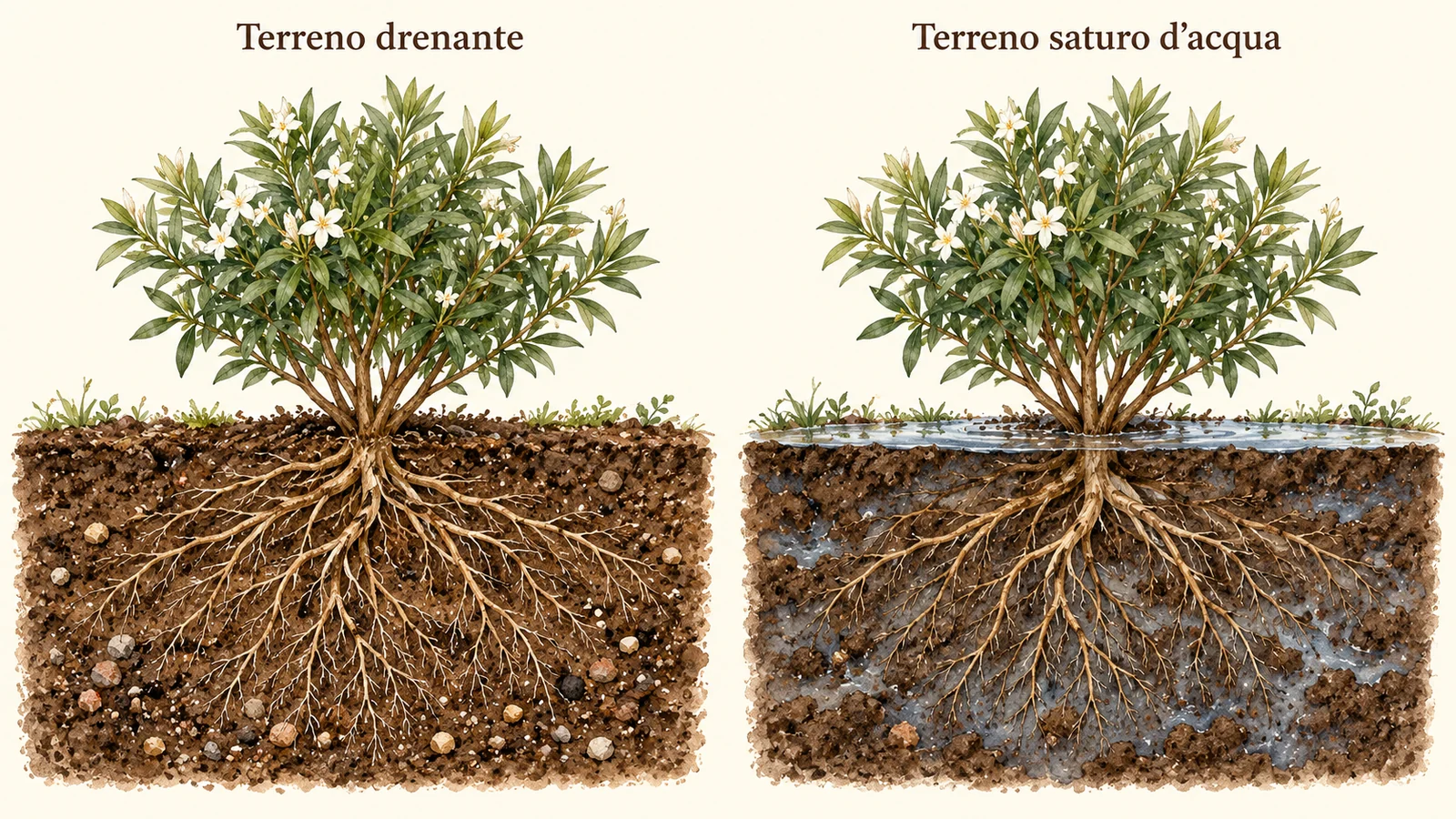
These signs, however, do not by themselves identify the cause. To describe them correctly, note down the species, when they appeared and whether they affect just one plant or multiple specimens. Observe whether the suffering plants coincide with the wettest area and whether the change began before or after the rains.
A photograph of the foliage must be accompanied by a view of the flowerbed and surrounding soil. The detail of a yellow leaf, isolated from the context, can be of little use in setting up an evaluation.
Waterlogging and root rot are not the same thing
Saturated soil can create conditions conducive to some root diseases, but a puddle does not demonstrate the presence of a pathogen. For example, confirmation of Phytophthora may require specific samples and tests.UC IPM, symptoms and confirmation
For this reason it is useful to keep two steps distinct: understanding how the water behaves and evaluating the state of the plant. Any treatment does not replace the control of the conditions that keep the root zone wet.
If the problem involves oaks that are already showing signs of decline, see our guide to Phytophthora in oaks. The relationship between symptoms and their possible cause must be assessed in each case.
What to check after the rain
Before you dig, gather some simple information:
- identify the areas where the water arrives and those where it accumulates;
- photograph the wet surface and nearby plants;
- check when the last irrigation started;
- check from outside whether any grates are covered by leaves;
- note recent work, vehicle traffic or changes to beds;
- Compare the spot with a nearby area that dries normally.
There is no need to assign a diagnosis to every sign immediately. A precise description helps determine the next check. Knowing that the problem began after a path was laid or a sprinkler replaced can also guide the site visit.
When the soil is very wet, limit foot traffic and work. Working soil while it is sticky or muddy can damage its structure. Penn State Extension, soil care
Which measures may help
Adjust the irrigation system
Checking the controller, zones and water distribution is a useful first step. The aim is to understand where water is being applied and whether the schedule suits actual conditions. Read about our pop-up irrigation systems.
Improve the soil when it is workable
In some cases improving soil structure may help; in others a deeper obstruction needs attention. Materials, quantities and methods must suit the existing soil. Any organic matter should be incorporated as part of a plan suited to the surface and plants. RHS, moist soils
Evaluate slopes and drainage
A drain requires a suitable destination for the collected water. It is necessary to check heights, obstacles, underground services and conditions of the area: the mere presence of a pipe does not guarantee the result. Extensive jobs require competent planning and execution.RHS, drainage installation
Consider changes to the garden layout
If an area remains problematic, it may be useful to reconsider bed layout and plant selection after assessing the site. Species differ in their tolerance of wet soil, and a plant suited to moisture is not automatically suited to prolonged flooding. RHS, choice of plants
Mistakes to avoid
The first mistake is to increase the water just because a plant appears wilted. The soil must be checked first. The second is to fertilize to correct yellowing without having clarified the origin.
Replacing the lawn immediately can also be premature: if water continues to collect there, the new turf will face the same conditions. First clarify how soil and water should be managed, then plan the lawn’s recovery.
Also avoid universal recipes with sand, gravel or products presented as solutions. A serious proposal should explain what cause it addresses, what tests support it, and how the outcome will be evaluated.
Gardens in Sassari: assessing each site
Two neighboring gardens may have different conditions. A villa with large paved surfaces, a shared lawn and a sheltered flowerbed require different observations. Even within the same space, exposure, elevation, use and distribution of water can change.
For this reason, a maintenance calendar must be adapted to the conditions observed. In the transition to autumn management, it is advisable to compare the irrigation programming with the actual rainfall and check the already problematic points, without automatically applying the same adjustment to all areas.
Our garden maintenance (in Italian) can include these checks in routine care. For turf, see our page on lawn maintenance.
An example of a useful observation
Imagine a wet strip of lawn alongside a path and another wet area around a sprinkler. Photographing both is useful, but treating them alike immediately would be premature. First check whether the path channels water onto the lawn; then check whether the second area becomes wet when its irrigation zone runs. These are starting questions, not diagnoses. Recording the details helps explain the proposed work and compare conditions before and after changes.
Frequently asked questions
How long can a puddle linger before it’s worth investigating?
There is no universal time valid for every soil and plant. Record the duration and frequency of episodes: comparing multiple events is more useful than a threshold applied without context.
Do yellow leaves always indicate too much water?
No. The plant species, soil, distribution of symptoms and previous care all matter. Checking soil moisture is one step, not a complete diagnosis.
Is it enough to make holes in the lawn?
First you need to understand where the obstacle is and where the water can go. A superficial intervention does not necessarily address a problem of elevation, inflow or deep drainage.
When is it best to ask for an inspection?
Request a visit when water repeatedly accumulates, plants deteriorate or its source is unclear. Prepare photos, the locations affected and information about irrigation to make the assessment more useful.
Want to find out why your garden stays wet?
If water repeatedly collects in your garden in Sassari or northern Sardinia, you can contact GardenStyle to discuss a site visit. We begin with the conditions of the garden, water management and signs on the plants to identify the checks and interventions appropriate to your case.